


Vitesse Energy (VTS): Buy, Sell, or Hold Post Q1 Earnings?
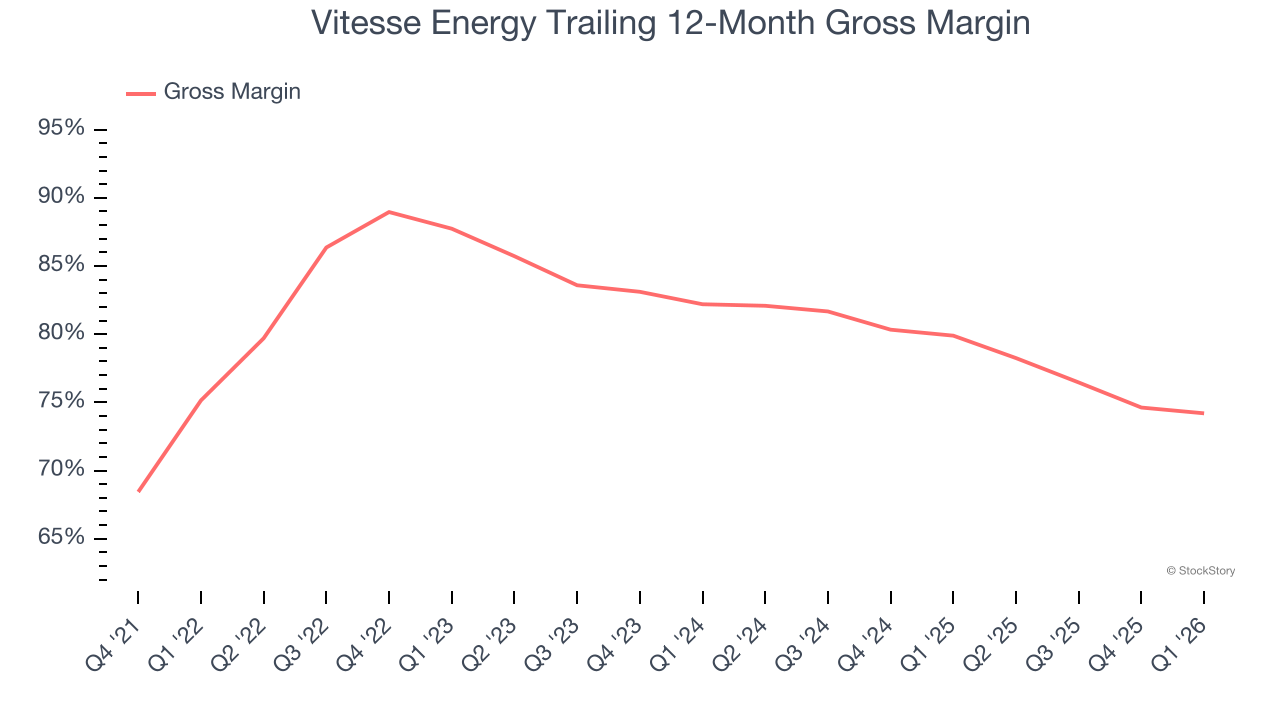
Over the past six months, Vitesse Energy’s shares (currently trading at $18.50) have posted a disappointing 10% loss, well below the S&P 500’s 13.2% gain. This was partly driven by its softer quarterly results and might have investors contemplating their next move. Why Does VTS Stock Spark Debate? Taking a hands-off approach to energy production, Vitesse Energy (NYSE:VTS) owns non-operated stakes in oil and natural gas wells primarily in North Dakota and Montana’s Williston Basin. Two Things to Like: 1. Elite Gross Margin Powers Best-In-Class Business Model In a single quarter or year, gross margins in the sector can swing wildly due to commodity prices, hedging, or changes in labor costs. Over a multi-year period across different points in the cycle, gross margin differences can signal whether a company is a structurally-advantaged producer (“rock” quality, takeaway, operating costs) or not. Vitesse Energy, which averaged 80% gross margin over the last five years, exhibits impressive unit economics in the sector. It means the company will remain profitable at lower commodity prices than peers with inferior gross margins and serves as an excellent starting point for ultimate operating profits and free cash flow generation. 2. Excellent Free Cash Flow Margin Boosts Reinvestment Potential Free cash flow isn’t a prominently featured metric in company financials and earnings releases, but we think it’s telling because it accounts for all operating and capital expenses, making it tough to manipulate. Cash is king. Vitesse Energy has shown terrific cash profitability, driven by its lucrative business model that enables it to reinvest, return capital to investors, and stay ahead of the competition. The company’s free cash flow margin was among the best in the energy upstream and integrated energy sector, averaging 24.4% over the last five years. One Reason to be Careful: Long-Term Revenue Growth Disappoints Cyclical industries such as Energy can make mediocre companies look great for a time, but a long-term view reveals which businesses can actually withstand and adapt to changing conditions. Over the last four years, Vitesse Energy grew its sales at a sluggish 5.9% compounded annual growth rate. This wasn’t a great result compared to the rest of the energy upstream and integrated energy sector, but there are still things to like about Vitesse Energy. Final Judgment